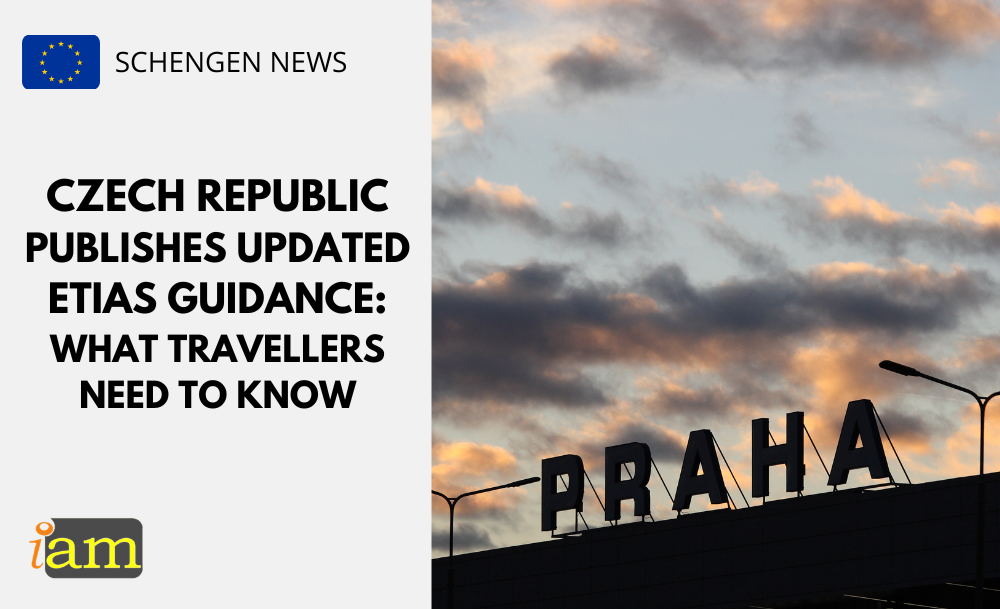
Czech Republic Publishes Updated ETIAS Guidance: What Travellers Need to Know
Travelling to Europe without a visa? A new travel authorisation system is expected to affect many visa-exempt travellers visiting the Schengen Area. The Czech Republic has published updated guidance on the European Travel Information and Authorisation System (ETIAS), explaining who will need authorisation, how it will work and what travellers should know before planning their journeys.

What Is ETIAS and When Will It Start?
ETIAS stands for the European Travel Information and Authorisation System. It is a travel authorisation for eligible travellers from countries whose citizens can currently enter the Schengen Area without a visa.
According to the Czech Ministry of Foreign Affairs, ETIAS is expected to launch in 2027. However, the official application portal is not yet operational.
ETIAS is not a visa. It is an additional travel authorisation intended to support border controls and strengthen security across the Schengen Area.
Who Will Need ETIAS?
The requirement will apply to nationals of non-EU countries whose citizens do not currently require a visa to enter the Schengen Area and who travel under the visa-free regime.
The Czech guidance confirms that ETIAS will not be required for citizens of EU Member States, the European Economic Area (EEA) or Switzerland.
Certain other exemptions apply, including holders of valid residence permits issued by qualifying countries and holders of valid Schengen visas. The Czech guidance specifies that residence permit exemptions do not include Cyprus and Ireland.
Travellers should check their individual circumstances before departure.
How Will the ETIAS Application Work?
Applications will be submitted exclusively online through the official European Union ETIAS portal.
The Czech guidance states that applications are typically processed automatically within minutes. However, applications requiring manual review may take longer.
Further information about the registration process will be published before ETIAS becomes operational.

How Long Will ETIAS Be Valid?
According to the Czech guidance, an ETIAS travel authorisation will be valid for three years from its issue date, or until the travel document used in the application expires, whichever comes first.
Travellers will be able to make multiple visits during its validity period. However, visa-free stays in the Schengen Area must remain within the existing limit of 90 days in any 180-day period.
What Should Travellers Do Now?
The official application portal is not yet open. The Czech authorities warn travellers against websites currently offering paid ETIAS applications, describing these as fraudulent.
How do you think ETIAS will affect your future European travel plans? Talk to us in the comment section below. Or if you need more advice on the above, contact us for further travel & immigration advice.
Check out the deals we have found below and tell us your travel plans.
Check out the offers and discounts from:
And because of the pandemic, don’t forget to get your travel insurance, which will cover you for flight disruptions and pandemic related matters.
IaM can help with your visa application to Europe, the United States, the UK & other countries
If you need help with a US visa, a UK Visa, or a visa to Europe, including help with appointment booking obligations, IaM can help. For more information and advice on US immigration, UK immigration law and US visa applications or if you need any help or assistance please, reach out to your Visa Coordinator at IaM.
Some of our posts include affiliate links. If you choose to purchase any of these products, we might get a small commission. For more information, check out our TOS.

- Germany’s Schengen Visa Appointment Waiting Lists: What UK Applicants Should Know - 13 November 2026
- Schengen Visa: Can You Apply Six Months Before Travelling? - 12 November 2026
- Denmark, Sweden and Norway Extend Schengen Border Checks from November 12 - 11 November 2026