Canada Extends Temporary Entry Restrictions Until November 2026: Who Is Affected?
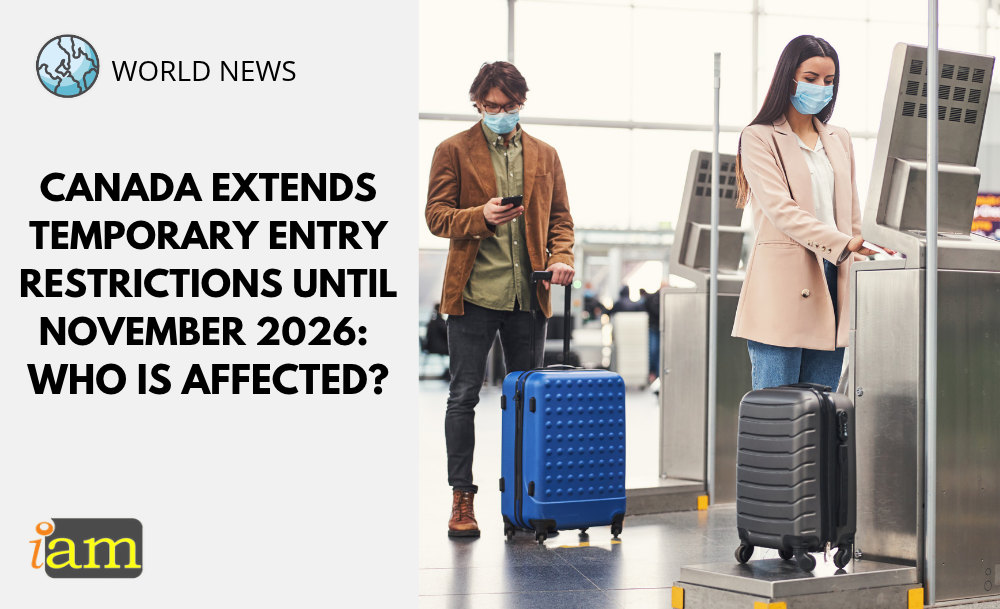
Canada has extended temporary immigration and border measures introduced in response to the Ebola disease outbreak for another 60 days, with the measures now set to remain in place until 27 November 2026. The restrictions affect certain travellers connected to the Democratic Republic of the Congo (DRC), Uganda and South Sudan, making it important to check the rules before travelling to Canada.

What has Canada changed?
Immigration, Refugees and Citizenship Canada (IRCC) confirmed that its temporary immigration measures have been extended until 27 November 2026.
Immigration documents remain suspended for residents of countries considered at high or very high risk of an Ebola disease outbreak, currently including the DRC, Uganda and South Sudan. According to IRCC, people whose last country of residence when they applied was one of these countries cannot currently travel to Canada, even with a previously approved visa, permit or electronic travel authorisation (eTA).
IRCC will continue processing affected new and existing applications, but these applications will not be finalised while the measures remain in force.
Who else is affected by Canada’s Ebola border measures?
The rules also affect some foreign nationals based on their recent travel history.
A foreign national who has been in the DRC within the previous 21 days is generally prohibited from entering Canada, boarding a flight to Canada or transiting through Canada, subject to specified exemptions. Transport Canada’s Interim Order similarly prevents affected foreign nationals from boarding direct or indirect flights to Canada unless they have been outside the DRC for 21 consecutive days immediately before the flight, unless an exception applies.
Foreign nationals who have been in Uganda or South Sudan during the previous 21 days can travel to Canada but must quarantine for 21 days after arrival unless exempt. Canadian citizens, permanent residents and people registered under the Indian Act who have recently been in any of the three affected countries are permitted to enter Canada, but are also subject to quarantine requirements unless exempt.
What should travellers know?
Travellers should check how the measures apply to their residence, immigration status and recent travel history before making plans. The Canadian Government also states that transit through an affected country can bring a traveller within the border measures.
How could these rules affect your Canada travel plans? Talk to us in the comment section below. Or if you need more advice on the above, contact us for further travel & immigration advice.
Check out the deals we have found below and tell us your travel plans.
Check out the offers and discounts from:
And because of the pandemic, don’t forget to get your travel insurance, which will cover you for flight disruptions and pandemic related matters.
IaM can help with your visa application to Europe, the United States, the UK & other countries
If you need help with a US visa, a UK Visa, or a visa to Europe, including help with appointment booking obligations, IaM can help. For more information and advice on US immigration, UK immigration law and US visa applications or if you need any help or assistance please, reach out to your Visa Coordinator at IaM.
Some of our posts include affiliate links. If you choose to purchase any of these products, we might get a small commission. For more information, check out our TOS.

- UK and EU Agree on New Youth Experience Scheme: What Young People Need to Know? - 23 November 2026
- Schengen Visa for Unemployed Applicants: How Can You Demonstrate Financial Stability? - 22 November 2026
- Lithuania Tightens Temporary Residence Permit Rules: New Work and Study Application Restrictions from November 2026 - 21 November 2026